

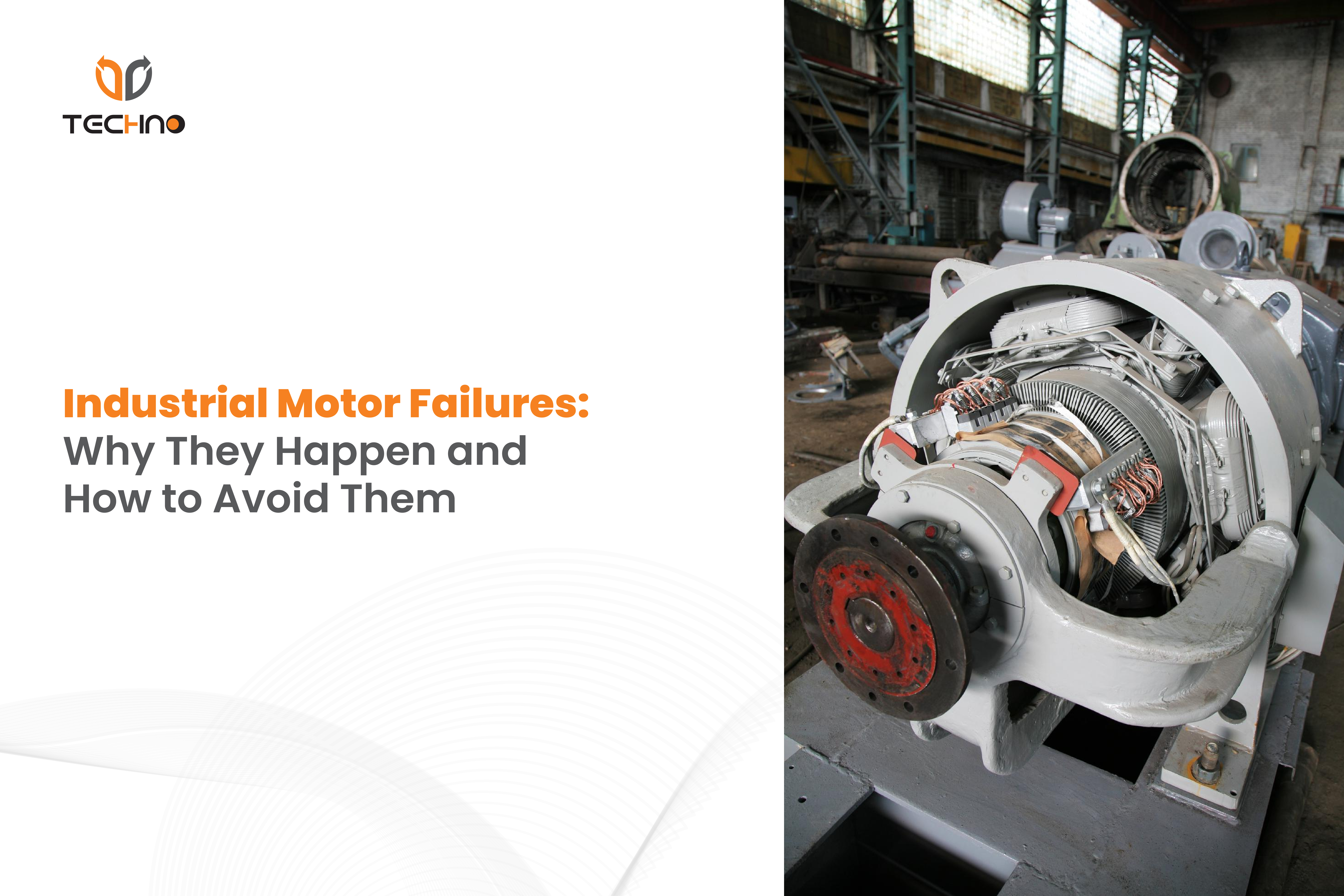
Industrial motors are the workhorses of manufacturing, processing plants, HVAC systems, and many other industrial applications. When they perform reliably, they keep operations running smoothly. But when they fail unexpectedly, the consequences can be costly – from production interruptions to costly repairs and safety risks. Understanding why industrial motors fail is the first step toward avoiding those failures. In this article, we look at common causes of motor failure, some real-world data, and best practice strategies for maximizing motor life and reliability.
Understanding why industrial motors fail, recognizing early warning signs, and implementing appropriate preventive measures is essential to maintaining operational continuity. According to the Electrical Safety Foundation International, motor failure contributes significantly to industrial downtime, with millions of dollars in production lost each year due to electrical failure alone. A detailed 2024 report highlights that approximately 40% of motor failures are caused by electrical insulation breakdown, underscoring the importance of regular maintenance and monitoring.
Understanding the Root Causes of Motor Failure
Motor failure rarely occurs suddenly. This is usually the end result of chronic stress, environmental challenges, or improper operating conditions. One of the most common causes is overheating, which gradually damages the motor windings, bearings, and insulation. When motors operate in environments with poor ventilation, high ambient temperature, or excessive dust accumulation, their internal components are unable to cool properly, leading to thermal degradation.
Mechanical stress also plays an important role. Misalignment between the motor and the driven equipment increases friction and stress on the shaft and bearings. This causes abnormal wear and tear that ultimately leads to bearing failure – one of the most common mechanical problems seen in industrial operations. Contamination from moisture, chemicals, or dust further accelerates degradation, especially in industries such as food processing, chemical plants, and heavy manufacturing.
How Improper Installation Leads to Longer-Term Damage
While motors are designed for durability, incorrect installation can significantly reduce their lifespan. A motor that is not mounted on a stable, level foundation may vibrate excessively during operation. These vibrations transfer stress throughout the motor housing and bearings, reducing efficiency and causing cracks or looseness in internal components.
Improper wiring is another installation fault that often goes unnoticed. Loose connections, incorrect cable size, and lack of grounding can expose the motor to erratic electrical behavior. This not only causes damage to the electrical system but also increases the risk of short circuits and insulation failure. When motors are installed in environments unsuitable for their design – such as placing open-drip motors in a dusty or wet environment – the risk of failure increases manifold.
Why Maintenance Practices Determine Motor Lifespan
Maintenance isn’t just about fixing problems; It’s about stopping them. Motors require regular inspection, lubrication, cleaning, and testing to ensure their optimal performance. Neglecting basic tasks like bearing lubrication leads to friction build-up, overheating, and ultimately the collapse of the bearings. Likewise, ignoring vibration changes or unusual noises can turn minor problems into catastrophic failures.
As industries move toward automation and data-driven decision-making, predictive maintenance has become increasingly important. Using technologies like vibration analysis, infrared thermography, and motor current signature analysis helps technicians detect hidden problems before they escalate. Companies that adopt predictive maintenance strategies see significantly fewer unplanned shutdowns and enjoy longer motor life cycles.
The Impact of Environmental Factors on Motor Performance
Environmental conditions are often underestimated when analyzing motor failures. High humidity, corrosive chemicals, and airborne contaminants can enter motor enclosures and cause corrosion, electrical tracking, and insulation breakdown. Outdoor motors face challenges such as temperature fluctuations, precipitation, and UV exposure, which can degrade components over time.
Industries in coastal areas must also consider the corrosive effect of salt-rich air, which accelerates abrasion on metal surfaces. Motors operating in dusty environments, such as cement or mining plants, face the challenge of abrasive particles entering the bearing and insulation systems. To combat these environmental hazards, industries must select motors with appropriate enclosure ratings, such as TEFC (Totally Enclosed Fan Cooled) or explosion-proof design, depending on the application requirements.
Early Warning Signs That Indicate Motor Failure
Industrial motors rarely fail without indicating. Increased noise is often the first sign that bearings have worn out or are misaligned. Excessive vibration points to imbalance or loose components, while visible smoke or a burning smell indicates overheating and insulation failure. Motors that begin to draw more current than normal are often suffering from mechanical or electrical stress.
An increase in operating temperatures is another clear warning sign. Even a slight increase above the recommended level can dramatically reduce insulation life. Monitoring these early signs allows maintenance teams to address problems quickly and avoid major breakdowns.
How to Prevent Motor Failures Through Best Practices?
Preventing motor failure starts with selecting the right motor for the right application. Motors must match load requirements, environmental conditions, and duty cycles. Regular cleaning ensures that the cooling system works efficiently, while proper alignment and lubrication keep mechanical components running smoothly.
Investing in quality power conditioning equipment helps stabilize voltages and protect motors from electrical surges. Installing overload protection and ensuring proper grounding also prolongs the life of the motor. Maintenance staff should conduct periodic audits to check for wiring problems, loose connections, and abnormal performance deviations.
Training the operators is equally important. Many motor problems occur simply because the equipment is used incorrectly or overloaded. When operators understand load limits, start-stop cycles, and operational best practices, motors experience fewer stress points and operate more efficiently.
Why Choosing a Reliable Motor Supplier Matters?
Even with best practices, the quality of the motor itself plays a decisive role in long-term performance. Choosing motors from reputable suppliers ensures that the materials, winding quality, insulation grade, and manufacturing standards meet industrial expectations. Low-cost or counterfeit motors often fail quickly due to inferior components, poorly designed bearings, or weak insulation.
Trusted suppliers offer motors that undergo rigorous testing and provide after-sales support, warranty, and technical guidance. Investing upfront in high-quality motors ultimately reduces operating costs, reduces maintenance requirements, and provides stable performance over the full lifecycle of the motor.
Conclusion: Protect Your Operations with the Right Motors
Industrial motor failures can be costly, disruptive, and detrimental to productivity. Understanding their causes – from excessive heat and electrical imbalances to mechanical misalignment and poor maintenance – enables businesses to take proactive measures that ensure smooth operations. With correct installation, consistent maintenance, and early detection of problems, companies can dramatically reduce downtime and extend the lifespan of their motors.
For industries seeking reliable, long-lasting, and performance-driven solutions, Techno Sales offers some of the best industrial motors in the market, combining durability, precision engineering, and reliable after-sales support. Choosing the right motor partner today means securing reliable operation for years to come.
Comments are closed